Evans Above
I think the technical term for this is EGADS! Please be patient as we curse and yell at a database mixup that deep sixed dozens of our database entries. We need to clean up or recreate them one by one. Should be fun...
May 03, 2019
Hot Docs 2019 Reviews: The Corporate Coup d’Etat, Killing Patient Zero, and Framing John DeLorean
The Corporate Coup d’Etat
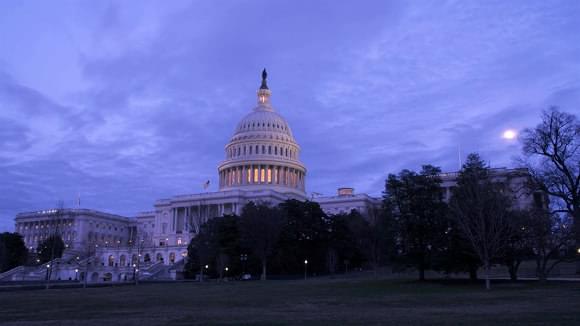
The Corporate Coup d’Etat, from director Fred Peabody, examines how much control companies have over the political process and public policy. The phrase “corporate coup d’etat” was coined by John Ralston Saul in 1995 and this doc shows how little control individuals have over their lives. We may vote and think we’re making a change but how much of that is just theatre? There’s a clip in the doc from the film Network where the Ned Beatty character sums it up pretty well: “You get up on your little twenty-one inch screen and howl about America and democracy. There is no America. There is no democracy. There is only IBM, and ITT, and AT&T, and DuPont, Dow, Union Carbide, and Exxon. Those are the nations of the world today.” We see towns devastated by closures and the people who still believe they’ll be rescued by politicians. The real sense of dread comes with the realization that the ship of democracy may have already set sail.
Laurie Lynd’s Killing Patient Zero takes us back to 1981, just seven years after homosexuality had been declassified as a mental illness in North America. When AIDS hit, it was called the “gay plague”, jokes were made at White House briefings, and society ignored the problems as thousands died. As misinformation and homophobia spread, a Canadian flight attendant named Gaétan Dugas was wrongly vilified as “Patient Zero”. Through interviews with social and research figures from the era and archival footage we see how one man became the victim of weaponized media and political groups bent on attacking the people rather than solving the problem.
Framing John DeLorean, from directors Don Argott and Sheena M. Joyce, tracks the meteoric rise and precipitous fall of famed auto designer John DeLorean, who designed a revolutionary car, started his own factories and was busted for cocaine smuggling when he needed money to save the firm. Using interviews with business associates and family members and using dramatizations with Alec Baldwin, the filmmakers try to get to the bottom of what motivated the man. It’s interesting enough, with Baldwin sometimes stepping out of character to try and work out DeLorean’s motivation, but I found myself wanting either a straight documentary, or a full on biopic, like a variation on last year’s TIFF film Driven, which had Lee Pace as the automaker and Jason Sudeikis as the FBI informant who brought him down.
May 02, 2019
Hot Docs 2019 Reviews: Illusions of Control
Illusions of Control
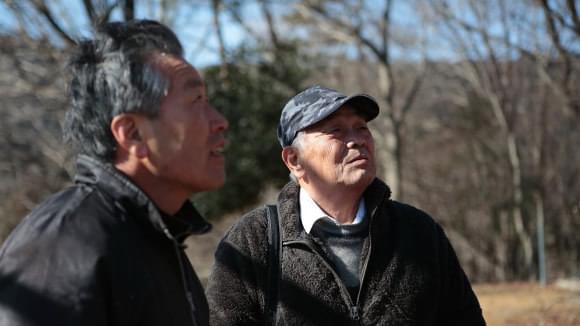
Shannon Walsh’s Illusions of Control looks at some of the ways we risk our society and lives and the people who have to deal with the (sometimes literal) fallout. Walsh’s film follows five women facing crises around the world. A mother in Yellowknife has to think about leaving her ancestral home because of the poison leaching into the soil and water from an abandoned mining project. Near the fallout zone of the Fukushima nuclear plant that was hit by the tsunami, a woman test her groceries for radioactivity. Another woman in China must deal with the dust storms and other issues rising from the desertification of her region. A Chicago woman deals with terminal cancer, while a woman in Mexico searches for her daughter’s remains in the desert as a result of the cartels.
The woman all have a dignity to their resilience in the face of these tragedies. They face their issues head on and make us consider what we can do and how problems can be solved and priorities altered.
May 01, 2019
Hot Docs 2019 Reviews: Shooting the Mafia, Bellingcat: Truth in a Post-Truth World, and Assholes: A Theory

Shooting the Mafia
Director Kim Longinotto’s Shooting the Mafia follows photographer Letizia Battaglia, whose coverage of Palermo’s La Cosa Nostra made her an important figure during the Mafia’s bloody battles during the Seventies. She escaped a controlling father when she was 16 by getting married, but when her controlling husband forbade her from going to school, she escaped that situation. She became Italy’s first female photographer for a daily newspaper. She took her camera into the seedy underbelly of murders and retribution, beating the police to the scenes. She had a second career as a politician and, now in her 80s, she’s still a vibrant figure and activist.
Battaglia is a fascinating figure, but at times the doc is in search of direction. Do we delve into the passionate woman with a voracious appetite for work, life and love? Do we examine her work and question whether her access and photographs were sometimes used by her subjects as a way to send messages or incite fear? Longinotto uses a mix of Battaglia’s photos, archival footage and classic Italian cinema. It’s a fascinating study, but there’s a feeling it could have been better.
Bellingcat: Truth in a Post-Truth World, from director Hans Pool, follows the citizen journalists of Bellingcat.com as they risk their lives and use open source investigative tools to try and uncover the truth in a world where images and videos can be manipulated and minds manipulated by social media. In the doc, they try and ascertain where a Syrian bombing video was shot, who was ringleading the white nationalist protests in Charlottesville and whether a Russian missile shot down Malaysian Flight 17 over Ukraine. Their methods are often accessible to the public. They see a Russian military vehicle in a free satellite photo on one roadway and then another on the other side of the border. Facebook posts by a group of wives and girlfriends suggest where their loved ones might be. The problems are crowd-sourced by the group. One might be an expert in determining time and location by the sun’s shadows, another might be able to geolocate based on rock formations. Their work embarrasses and angers some governments but can also be a tool used by others who are committed to getting the truth out, as long as it doesn’t anger or expose their own wrongdoings. It’s a fascinating look at people who just want to get to the truth.
I ended the day with Assholes: A Theory, a doc from director John Walker based on Aaron James’ book of the same name. It examines the rise of “asshole culture” and the people and groups that embrace it in frat houses, White Houses, Wall Street boardrooms and social media apps. Why do these, well, assholes thrive in some fields and why do some people find them attractive or even electable? From LGBTQ activist Vladimir Luxuria to psychologists to Monty Python’s John Cleese (who was at the screening) Walker and his talking heads examine these noxious members of society.
Apr 30, 2019
Hot Docs 2019 Reviews: Human Nature
Human Nature
Adam Bolt’s Human Nature examines one of the ethical dilemmas faced by the medical field. The discovery of clustered regularly interspaced short palindromic repeats or CRISPR means that there’s an ability to manipulate human DNA. On one side there’s a chance that many diseases and conditions could be eradicated. On their other side it raises the specter of designer babies. Want a tall blond athlete who’ll be good at sports and piano? The film talks to people in the field and those afflicted and raises the question, if we can design our future, should we?
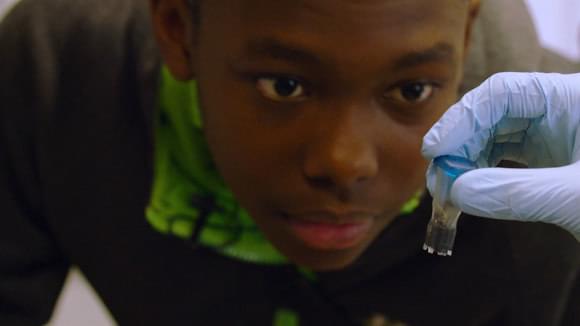
The film could talk in abstract to the scientists and ethicists, but it also looks at the human side. One of the subjects is David Sanchez, a bright, inquisitive young man. He has sickle-cell anemia and in the future it might be able to be detected in the womb and altered, but you’ll be surprised by his views on the issue.
Apr 29, 2019
Hot Docs 2019 Reviews: Our Godfather, Toxic Beauty, and The Hottest August
Our Godfather
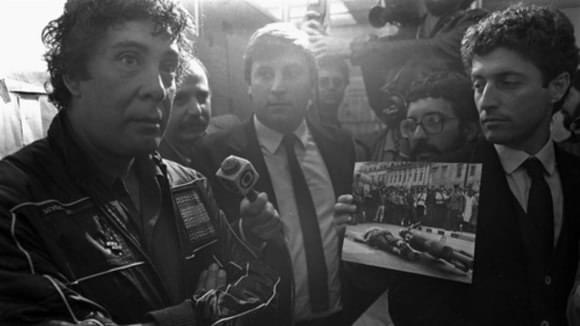
Our Godfather, from directors Mark Franchetti and Andrew Meir, tells the story of Tommaso Buscetta a.k.a. Don Masino. Buscetta turned state’s evidence after eleven members of his family were murdered and his testimony led to the conviction of over 400 Mafiosi in Italy and the United States. He know leads a life in witness protection and with archival photos, video and home movies we see his story unfold. It’s quite interesting seeing the court proceedings where former associates of Buscetta try to threaten him while simultaneously proclaiming that they’re innocent businessman.
Phyllis Ellis’ Toxic Beauty takes a look at the health implications of the beauty products many people use every day for years. It also traces a class-action lawsuit against Johnson and Johnson that argues the company knew that its popular talcum powder contains carcinogens. One side of the film follows a group of women in the U.S. and Canada as they pursue the case and try to show that J&J has known the danger lurking in their powder for decades.
The beauty industry is a multi-billion dollar industry. They claim everything is safe. But is it? Another component of the doc follows Mymy Nguyen, who has an elaborate routine of creams and makeup but begins to search for answers about product safety after she discovers a benign breast tumour.
You’ll find yourself looking at you or your loved one’s bathroom cabinet after watching this one.
I ended the day with The Hottest August, from director Brett Story. It traces the month of August 2017. While wildfires and hurricanes hit one part of the country, others celebrate or recoil from the new Trump administration and heightened white supremacist activity. The blistering heat serves as a backdrop as the filmmaker talks to people just trying to make it through the hot month while wondering what the future holds.
Apr 28, 2019
Hot Docs 2019 Reviews: Maxima, Inside Lehman Brothers, andThe Seer and the Unseen
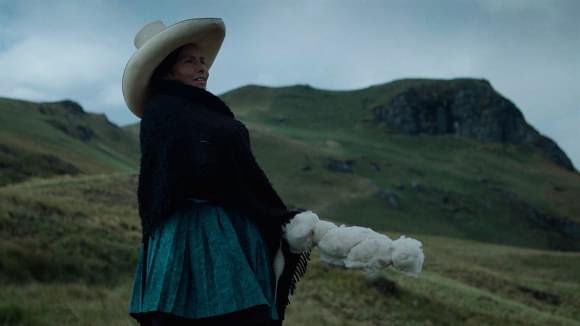
Maxima
The first Sunday of Hot Docs 2019 started off with a screening of Maxima. Claudia Sparrow’s documentary looks at the battle between Peruvian subsistence farmer Máxima Acuña and Newmont Mining Corporation, who want her land as part of a multi-billion dollar mining development. She’s harassed, intimidated and threatened by criminal prosecution, but never gives up.
The film is tense and terrifying as we see the lengths some companies and governments will go in pursuit of money when they think no one is watching and no one cares about the people involved. Maxima is a pint-sized inspiration; a powerhouse who won’t be scared off her land. Her David and Goliath story will leave you angered and inspired.
Speaking of being angered, Jennifer Deschamps’ Inside Lehman Brothers will stir up memories of the worldwide financial collapse of 2008. The story follows several whistleblowers who raised the alarm about subprime mortgage lending practices and found themselves hounded and harassed by their bosses and coworkers. One woman, Sylvia Vega-Sutfin, felt so threatened that she learned to defend herself with lethal means. As is the sad case in many of these whistleblower stories, the powerful executives mostly exit the crisis unscathed and protected by their political allies, while those who pointed out the situation find their lives turned upside down and their integrity questioned. The really infuriating part of these stories is how often the companies just find a new way to do the same old thing.
The Seer and the Unseen, a documentary from director Sara Dosa, takes us to Iceland and introduces us to Ragga, an environmentalist who is also a seer, able to communicate with elves. The elves, or “hidden people” are a part of Icelandic folklore and a small percentage of people have a belief and them. Ragga and her supporters believed that a proposed road through a lava field would disturb hidden elven landmarks and they launch protests and political battles to alter the road’s path. Ragga is earnest and passionate about her beliefs and to those who might sneer at her beliefs, I have to ask how it’s any different than basing laws and starting wars over more popular invisible people?
Apr 27, 2019
Hot Docs 2019 Reviews: Ask Dr. Ruth and Capturing Reality: The Art of the Documentary
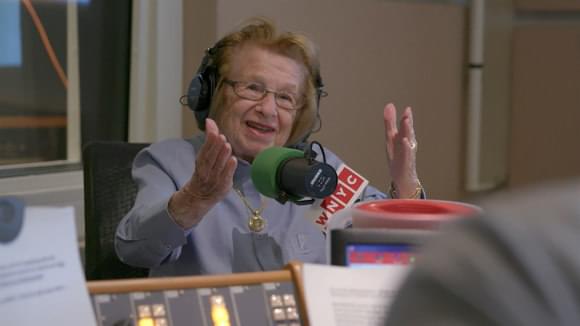
Ask Dr. Ruth
Sometime it seems like we know everything about Dr. Ruth Westheimer. The iconic sex therapist appears to be an open book, talking freely about masturbation, locating the clitoris, and sexual fantasies on radio, TV and in books. But she hasn’t really told us much about herself until now. Director Ryan White’s doc, Ask Dr. Ruth, delves into the history of this unstoppable force. Sent off to the safety of Switzerland, she was a Holocaust orphan. She was trained as a sharpshooter by the Israeli military. She was married three times, she’s a mother, she became a popular author and radio host and she’s still going strong at 90.
Westheimer’s story is one of remarkable determination and perseverance. She didn’t get her doctorate until she was 42. She tackled subject matter that was taboo and her forthrightness and charm broke down barriers that allowed people to feel freer about their fears, worries and personal identity. The crew hustles to keep up with this 4’ 7” bundle of energy and inquisitiveness and I dare you not to feel happy and inspired by this remarkable woman.
Next up on my schedule was Pepita Ferrari’s Capturing Reality: The Art of the Documentary. Ferrari died last year and Hot Docs has scheduled this 2008 film of hers as it’s a great examination of the filmmakers and techniques we’ll see unspooling throughout the festival. Ferrari spoke to thirty-three filmmakers including Alanis Obomsawin, Oscar-winner Laura Poitras, Werner Herzog, and Patricio Guzmán. This look at the motivations, techniques, and styles of the various documentarians is a perfect companion piece to immersing yourself in this art form during the festival.
Apr 26, 2019
Hot Docs 2019 Reviews: The Miracle of The Little Prince
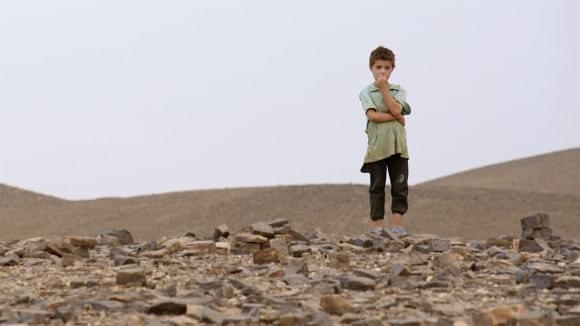
The Miracle of the Little Prince
It’s day two and my 2019 Hot Docs experience started with a screening of Marjoleine Boonstra’s The Miracle of the Little Prince. The Little Prince by Antoine de Saint-Exupéry, is the third most translated book on the planet. For some translators, the popular story has become a way to preserve the memory of endangered languages such as Tibetan, North Africa’s Tamazight, the Sámi language of Scandinavia and El Salvador’s Nawat.
The translators each have a personal mission to preserve their cultures and they’re interpretations of the story also reflect local philosophies, politics and biases. Two Tibetan translators, exiled in Paris, see it as a way to remain connected to the homeland they can’t go back to. The El Salvadorian translator works with a team of village women who are among the last 200 people to have knowledge of the Nawat language. The doc may seem a bit dry and slow-paced at times, but to linguists and lovers of languages, it is a valuable academic tool.
Apr 15, 2019
Glass Blu-ray review
M. Night Shyamalan’s Glass unites three characters that he’s introduced us to before. In Unbreakable, we met David Dunn (Bruce Willis) and Mr. Glass (Samuel L. Jackson), two men whose physical attributes set them up to be the perfect hero and villain combo. In Split, we met The Horde (James McAvoy), a violent offender with multiple personalities. Brought together in an institution run by Dr. Ellie Staple (Sarah Paulson), the trio are set for more superhero/supervillain stories that exist outside the DC and Marvel universes. With the home entertainment release you can now add Glass to your library. We had a chance to preview the Blu-ray/DVD/Digital Download combo set.
The 1080p AVC-encoded transfer is in the movie’s original 2.39:1 aspect ratio. The video presentation is, in a word, excellent. Details, whether they be human or environmental, are crystal-clear with great textures on skin, clothing and structures. In lower light scenes there is only rare digital noise and contrast and black levels are well presented. The colour palette, depending on the scene or character can be neutral to richly robust. Skin tones are excellent as well. In terms of the video presentation, if you get bored with saying excellent, you can try awesome or perfect as well. It’s up to you.
On the audio side, your ears will get treated to English Dolby Atmos and Dolby TrueHD 7.1 tracks as well as Spanish and French Dolby Digital 5.1 tracks. Subtitles are available in English SDH, French and Spanish. Those with an Atmos setup will enjoy good overhead effects like rolling thunder. The other surround speakers will immerse you in the world that Shyamalan has created. Your subwoofer will also be put to good use with powerful responses to each punch and thud. The musical presentation is well done and dialogue is clear and centred. An excellent audio presentation.
On the extras side, you get a DVD copy and a Movies Anywhere digital code as well as a nice collection of short featurettes. There’s an alternate opening, a collection of deleted scenes, character studies and a look at various aspects of the production.
Combine a story that opens itself to more exploration with fantastic video, audio and extras and you know that Glass should be part of your home entertainment library.
Mar 19, 2019
Mary Poppins Returns Blu-ray review
When Mary Poppins Returns hit theatres, I said my quick take was this: “Emily Blunt and Mary Poppins Returns both had big shoes to fill. It’s a perfect fit.” You can now take the fantastic English nanny home as Disney releases both 4K and Blu-ray versions. I had a chance to preview the Blu-ray combo pack.
The 1080p AVC-encoded transfer is in the film’s original 2.39:1 aspect ratio. The video presentation reflects the moods of the two real and fantasy worlds very well. The early London scenes are dark and dreary, populated with gray and washed-out blue tones, street lamps reflecting puddles left by the dreary clouds above. When Mary takes her young charges off to the more fantastical places and animated worlds, the colours pop. Details, whether it be on clothing, furniture, faces, or trees are crisp and complex and the animated lines are clean. Skin tones are natural and the black levels and contrast are spot on. Very little digital noise or artifacts are seen throughout.
On the audio side, your ears have their choice of an English DTS-HD Master Audio 7.1 soundtrack and Spanish and French Dolby Digital 5.1 tracks. Subtitles are available in English SDH, Spanish and French. Like all recent Disney home releases, the soundtrack is a little quieter than most reference levels, but again, the solution is just to turn it up a little. Just as Mary Poppins likes the children to be active for their health, your surround speakers will have a good workout, putting you in the centre of the action. It’s a musical and the soundtrack does not disappoint, with great tone in the music and clarity in the lyrics. Your subwoofer won’t get the same workout that it might in a Star Wars film, but when it is used it makes sense. Dialogue is clear and centred.
Mary Poppins was always able to pull amazing items out of her bags and her Blu-ray is stuffed with extras too. Besides a DVD version and a digital download code, the set also comes with a sign-along mode that puts lyrics up during the songs, a look at Dick Van Dyke’s cameo and the cast reactions, bloopers, a collection of shorts focusing on the shooting of the musical numbers, a deleted song, “The Anthropomorphic Zoo”, sung by songwriter Marc Shaiman, a lengthy featurette on the making of the film, and some deleted scenes.
Mary Poppins Returns is a lovely, sweet film that’s been given an excellent video and audio presentation by Disney. Well worth adding to your collection.